Deferred Maintenance Has a Credit Rating: Turning Backlog Into Defensible Capital Planning
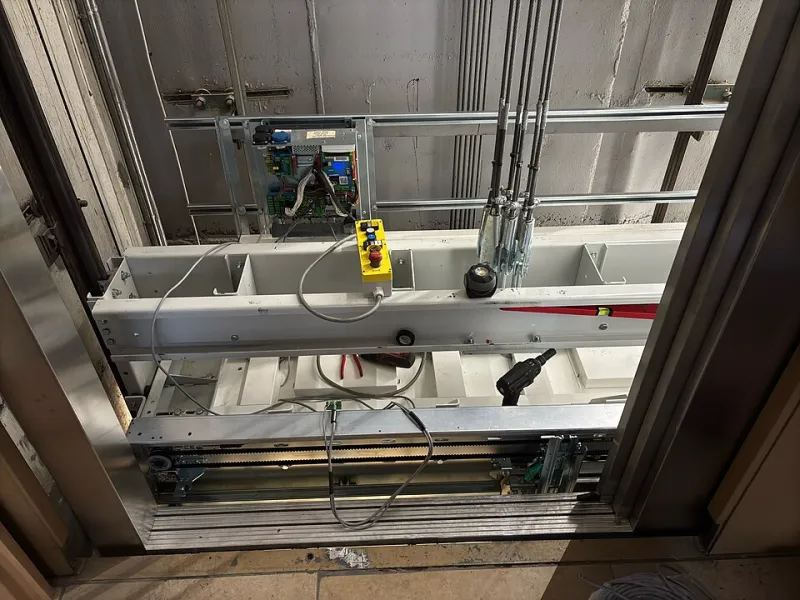
Photo: Killarnee, CC BY-SA 4.0, via Wikimedia Commons
Deferred maintenance has an unusual accounting profile. It is rarely recorded as a liability in proportion to the risk it creates, yet it behaves like one. A bearing that should have been replaced, a spindle that should have been rebuilt, a chiller that should have been serviced, or a safety interlock that should have been tested all remain on the plant floor as unresolved exposure. The work order may be deferred, but the risk is not.
For US manufacturers, the issue has become more visible as equipment ages and capacity pressure makes every unplanned stop more expensive. Lenders and equipment financiers increasingly look at maintenance practices as a signal of operational reliability. A backlog is not merely a maintenance department problem. It is a balance sheet issue in disguise, and it deserves to be quantified with the same discipline as inventory or receivables.
Why Backlog Is Off-Balance-Sheet Until It Is Not
Deferred maintenance shifts cost from a planned expense to an unplanned event. That shift can make short-term financial results look better while increasing long-term risk. A rebuilt pump may be postponed to protect a monthly budget, then replaced at premium cost after a failure. A preventive task may be skipped during a busy quarter, then reappear as scrap, rework, or a missed shipment.
The financial exposure has several components. There is the direct repair cost, which is often higher in an emergency because of expedited parts and overtime. There is the production cost of downtime, which depends on the equipment, the schedule, and the availability of alternate capacity. There is quality cost from process drift or damaged tooling. There is also customer cost: expediting, penalties, and the slower, harder-to-measure erosion of confidence that follows a missed commitment.
From Work Orders to Risk-Adjusted Exposure
A maintenance backlog becomes manageable when it is translated into money and risk. One practical method is to assign each deferred item an expected loss range. The calculation does not need false precision. It needs a consistent structure.
A simple model uses four inputs: probability of failure within the planning horizon, consequence if failure occurs, exposure duration, and the cost of planned repair now. Expected exposure equals failure probability multiplied by consequence, minus the planned repair cost. Consequence should include downtime cost per hour, expedited repair premium, scrap or rework risk, safety exposure, and customer impact. For equipment on a bottleneck, the downtime consequence may be several times the repair cost.
Consider a critical coolant pump with a planned rebuild cost of 8,000 dollars. If the probability of failure in the next twelve months is 30 percent and an unplanned failure would cost 60,000 dollars in downtime and expediting, the expected exposure is 18,000 dollars before the planned repair is counted. That does not automatically mean the rebuild should be funded immediately, but it changes the conversation from a maintenance preference to a risk-adjusted capital decision.
Ranking the Backlog by Criticality
Not every deferred item deserves equal urgency. A defensible ranking combines equipment criticality, condition, and failure consequence. One workable approach uses three tiers.
- Tier A includes items with safety, regulatory, or customer-stop implications, or equipment whose failure would halt a bottleneck line. These items require a dated action plan and a documented interim control if work cannot be completed immediately.
- Tier B includes equipment that affects quality, throughput, or maintenance cost but has some redundancy or recovery path. These items can be scheduled within a defined window.
- Tier C includes routine or cosmetic work that can be deferred without material operational risk.
Condition assessment should support the ranking. Vibration analysis, oil sampling, thermography, and visual inspection can move an item from a guess to an evidence-based judgment. Spare-parts lead times matter as well. A low-cost part with a sixteen-week lead time can create more risk than a high-cost part available overnight.
Building a Defensible Capital Plan
The output of the ranking should be a capital plan with three funding buckets: must-fund, should-fund, and monitor. Must-fund items address safety, regulatory exposure, or bottleneck risk. Should-fund items have a positive risk-adjusted return but can be scheduled. Monitor items remain on a watch list with defined triggers.
The plan should show the backlog in dollars, the risk-adjusted exposure by tier, and the proposed reduction over a defined period. It should also separate planned maintenance from capital replacement. Lenders and finance teams are more likely to trust a plan that acknowledges trade-offs than one that promises to eliminate all deferred work at once.
Documentation matters. Keep failure history, mean time between failures, mean time to repair, emergency work ratios, and preventive maintenance compliance. These metrics tell a story about reliability. A plant with a falling backlog and stable emergency work is reducing risk. A plant with a growing backlog and rising expedited purchases is borrowing from future uptime.
Governance and Metrics
A maintenance backlog should be reviewed on a fixed cadence with operations, maintenance, finance, and leadership in the same conversation. Track aging by tier, not just total work orders. Track deferred risk dollars, not just maintenance hours. Track the percentage of work that is reactive versus planned. These measures connect maintenance execution to financial exposure.
The objective is not to create a bureaucracy around every grease fitting. It is to prevent small, known issues from becoming large, unknown costs. At Sohar Industries SPC, the view is that deferred maintenance is a form of operational borrowing. It can be useful for a short period, but it carries a cost. Quantifying that cost turns a backlog into a plan, and a plan into a defensible capital decision.