The Reshoring Reckoning: 7 Strategic Moves US Manufacturers Are Making to Bring Production Back Home

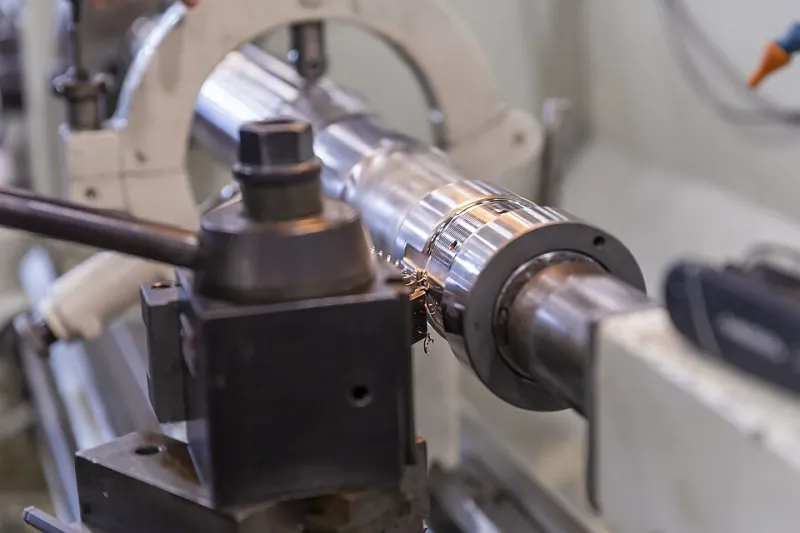
Photo: i_am_jim, CC BY-SA 3.0, via Wikimedia Commons
For much of the past three decades, the logic of offshore manufacturing seemed airtight. Lower labor costs, favorable trade arrangements, and a global logistics infrastructure that made distance feel irrelevant combined to create a powerful economic case for moving production overseas. American companies followed that case, and American manufacturing employment bore the consequences.
That calculus has shifted — not gradually, but with the kind of abruptness that forces strategic reassessment. The COVID-19 pandemic exposed single-source dependencies with brutal clarity. Geopolitical friction with major manufacturing nations introduced risk premiums that never appeared in procurement spreadsheets. Shipping costs and lead times, once predictably low, became wildly variable. And a wave of federal legislation — from the CHIPS and Science Act to the Inflation Reduction Act to expanded Buy American provisions — reordered the financial incentives around domestic production.
The reshoring movement that has gained momentum through 2024 and into 2025 is not nostalgia. It is strategy. And the manufacturers executing it most effectively are following a recognizable set of moves.
1. Conducting an Honest Total Cost of Ownership Analysis
The single most important first step — and the one most frequently skipped in the original offshoring decisions — is a rigorous total cost of ownership (TCO) analysis that captures all costs associated with overseas production, not just unit price.
A comprehensive TCO model includes ocean freight, port fees, customs duties, and tariffs. It includes the carrying cost of the additional inventory buffer required to manage longer and less predictable lead times. It incorporates the engineering and quality management overhead associated with remote supplier oversight. It accounts for intellectual property risk, currency fluctuation exposure, and the cost of supply disruptions — whether from a port strike, a geopolitical event, or a public health crisis.
When manufacturers run this analysis honestly, the labor cost arbitrage that justified offshoring frequently narrows or disappears entirely. For precision-manufactured components with high quality requirements, the gap often inverts. Domestic production, when evaluated against true total cost rather than quoted unit price, is frequently more competitive than the original decision-makers assumed.
2. Leveraging Federal and State Incentive Programs
The policy environment supporting domestic manufacturing has not been this favorable in a generation. Companies evaluating reshoring decisions in 2025 are operating in a landscape where federal incentives, state economic development programs, and regional manufacturing grants can materially alter project economics.
The CHIPS and Science Act allocated substantial funding for semiconductor manufacturing and related supply chains. The Inflation Reduction Act created production tax credits for clean energy components manufactured domestically. The Department of Defense's domestic industrial base initiatives provide procurement preferences and direct investment for defense-adjacent manufacturing categories.
At the state level, programs vary significantly, but many industrial states — Ohio, Texas, South Carolina, Indiana, and Michigan among them — have developed competitive incentive packages targeting manufacturing facility investment, including tax abatements, workforce training grants, and infrastructure support.
Manufacturers who engage economic development agencies early in their site selection process frequently discover that the effective cost of establishing domestic production capacity is substantially lower than initial estimates suggest.
3. Investing in Advanced Manufacturing Technology to Offset Labor Cost Differentials
One of the legitimate objections to reshoring has always been that US labor costs make domestic production uncompetitive in labor-intensive manufacturing categories. The response from manufacturers executing successful reshoring strategies is not to ignore this constraint — it is to engineer around it.
Advanced manufacturing technology — CNC machining centers with multi-axis capability, robotic assembly and material handling systems, automated quality inspection using vision systems and coordinate measuring machines, and digital manufacturing platforms that integrate design with production — reduces the labor content of manufactured goods while improving consistency and throughput.
A facility that would have required 200 production workers under a 1990s manufacturing model may require 40 highly skilled technicians operating and maintaining automated systems today. The labor cost differential between the US and lower-cost countries is far less significant when the labor content per unit is dramatically reduced.
This is precisely the model that precision manufacturing companies like Sohar Industries SPC have built around — not competing on labor cost, but competing on capability, consistency, and the kind of technical service that automated, high-precision domestic production makes possible.
4. Rebuilding the Supplier Ecosystem Strategically
One of the underappreciated challenges of reshoring is that decades of offshoring eroded not just individual manufacturing facilities, but entire industrial ecosystems. The network of domestic suppliers, specialty material providers, toolmakers, and supporting service businesses that once surrounded US manufacturing clusters contracted significantly.
Manufacturers returning to domestic production frequently discover that the supplier ecosystem they need does not yet exist at the scale or geographic concentration required. Rebuilding it requires intentional investment — in some cases, helping to develop or capitalize domestic suppliers for critical inputs, or clustering production near existing industrial infrastructure that can support the required supply base.
Regional manufacturing clusters — the precision machining corridor in the upper Midwest, the aerospace supply chain concentration in the Pacific Northwest and Southeast, the medical device manufacturing hub in the Minneapolis-St. Paul area — represent existing ecosystems worth building around. Reshoring strategies that leverage these clusters benefit from established supplier relationships, specialized workforce concentrations, and technical education infrastructure that supports ongoing workforce development.
5. Prioritizing Workforce Development as a Core Capital Investment
The skilled manufacturing workforce that once populated American factory floors did not simply retire — it aged out of the labor market without being replaced at sufficient scale. The pipeline of machinists, toolmakers, quality technicians, and manufacturing engineers has been undersupplied for years, and the reshoring wave is intensifying competition for available talent.
Manufacturers who treat workforce development as a capital investment rather than an HR function are gaining a durable competitive advantage. Partnerships with community colleges and technical schools to develop apprenticeship programs, on-the-job training pipelines that create advancement pathways for entry-level workers, and competitive compensation structures that reflect the genuine scarcity of skilled manufacturing talent — these are not philanthropic gestures. They are strategic necessities.
The manufacturers winning the reshoring race are not simply opening facilities and posting job listings. They are building talent pipelines years in advance of their labor needs, working with educational institutions to align curriculum with actual production requirements, and creating workplace environments that attract the next generation of manufacturing professionals.
6. Using Reshoring as a Quality and Responsiveness Differentiator
For manufacturers supplying industrial customers, the decision to produce domestically is increasingly a commercial differentiator, not just a cost management exercise. Customers who experienced supply disruptions from overseas sources during the 2020-2022 period have not forgotten the experience. Many have written domestic sourcing requirements into their supplier qualification criteria.
The ability to offer shorter lead times, greater scheduling flexibility, faster response to engineering change requests, and direct quality oversight is a genuine value proposition in B2B industrial markets. It supports premium pricing, deepens customer relationships, and reduces the vulnerability to competitive displacement that comes with being a purely price-driven supplier.
Precision manufacturing capabilities amplify this advantage. A domestic supplier who can hold tight tolerances consistently, respond to expedite requests, and participate actively in customer design reviews is providing a level of service that offshore alternatives structurally cannot match.
7. Planning for the Long Game, Not Just the Current Policy Environment
Policy environments change. Tariff structures shift. Trade agreements evolve. Manufacturers making reshoring decisions in 2025 should build their business cases on fundamentals that remain valid across a range of policy scenarios, not solely on the current favorable incentive environment.
The fundamentals that endure are: proximity to customers, supply chain resilience, workforce capability, and the quality premium that precision domestic manufacturing can command. These are durable competitive advantages that do not disappear when a tax credit expires or a trade policy is renegotiated.
The reshoring movement is not a temporary response to a specific policy moment. It is a structural reassessment of where value is created in a manufacturing enterprise, and which supply chain configurations best protect that value over time. The companies making that reassessment with clarity and rigor — investing in technology, workforce, supplier relationships, and precision capability — are building industrial positions that will prove resilient across the economic cycles ahead.
At Sohar Industries SPC, we have built our capabilities around exactly the kind of precision manufacturing that makes domestic production a genuine competitive advantage. We work with clients navigating reshoring decisions every day, and the pattern is consistent: the companies that invest in getting it right, rather than simply getting it done quickly, are the ones that build lasting advantage from the transition.