When Cutting-Edge Machines Cut Into Your Bottom Line: The Hidden Liability of Over-Precise Equipment
There is a widely held assumption in manufacturing that greater precision is always the safer bet. When specifying new equipment, procurement teams and engineers often default to the most capable machine within budget, reasoning that additional capability provides a buffer against future demands. On the surface, this logic appears sound. In practice, it frequently produces the opposite of its intended outcome — inflated capital expenditure, elevated maintenance requirements, and operational complexity that the production environment neither needs nor can efficiently absorb.
This phenomenon, sometimes called precision misalignment, is not a fringe concern. It is a structural cost driver that affects manufacturers across aerospace, consumer products, automotive components, and general industrial fabrication. Understanding when precision becomes a liability — rather than an asset — requires a frank examination of how equipment specifications interact with real-world production economics.
The Gap Between Specified Capability and Required Performance
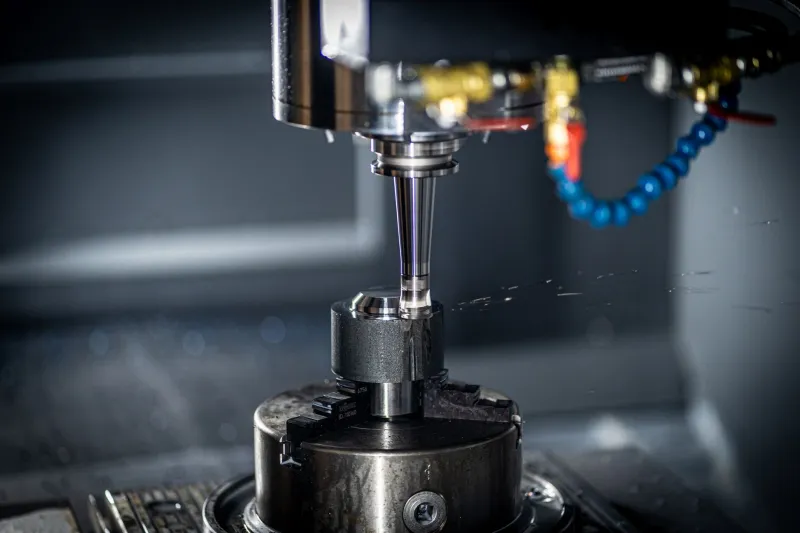
High-precision machinery is engineered to maintain extraordinarily tight tolerances under demanding conditions. Five-axis machining centers capable of holding sub-micron repeatability, coordinate measuring machines with nanometer-level resolution, and multi-axis grinding systems designed for aerospace-grade surface finishes all represent genuine engineering achievements. They also represent significant financial commitments that only deliver value when the application demands their full capability.
The critical question manufacturers rarely ask with sufficient rigor is: what does this specific application actually require? When a component destined for an agricultural implement or an HVAC enclosure is produced on equipment calibrated for turbine blade tolerances, the manufacturer is paying a substantial premium — in acquisition cost, in cycle time, in maintenance intervals, and in operator qualification requirements — for precision that contributes nothing to the end product's performance or the customer's willingness to pay.
A mid-sized contract manufacturer in the Midwest learned this lesson after investing in a precision grinding system rated for aerospace applications. The machine was acquired during a period of optimism about entering the aerospace supply chain, a transition that ultimately did not materialize. The equipment then sat at the center of their general industrial production line, processing parts that required tolerances roughly forty times less demanding than the machine's design specification. Cycle times were longer than a conventional alternative would have required, preventive maintenance intervals were more frequent, and the facility's HVAC system required upgrades to maintain the environmental stability the machine demanded. The total cost of ownership over five years substantially exceeded what a purpose-appropriate machine would have cost — including the hypothetical replacement of that machine mid-cycle.
Maintenance Complexity as a Hidden Multiplier
Precision equipment does not simply cost more to purchase — it costs more to sustain. The mechanical and electronic systems required to maintain micron-level accuracy demand calibration schedules, environmental controls, and service expertise that standard production machinery does not. In many US manufacturing facilities, particularly those operating outside major industrial metros, sourcing qualified service technicians for high-end precision systems involves either expensive travel costs or extended equipment downtime while waiting for certified personnel.
This maintenance overhead compounds when the production environment itself is not optimized for precision equipment. Vibration from adjacent machinery, temperature fluctuations from loading dock activity, and humidity variation across seasons can all degrade the performance of highly sensitive systems. Mitigating these environmental factors requires investment in facility infrastructure — investment that, again, delivers no competitive return when the application does not require it.
Manufacturers operating in cost-sensitive market segments face a particularly acute version of this problem. When customers are purchasing on price and delivery rather than on tolerance capability, the operational overhead of maintaining precision equipment that exceeds application requirements is a direct drag on margin. The manufacturer is, in effect, subsidizing a level of quality that the market has not requested and will not pay for.
Operator Qualification and the Training Overhead
Beyond equipment acquisition and maintenance, precision machinery introduces a human capital dimension that is frequently underestimated during procurement. Operating high-precision systems effectively requires trained personnel who understand not only the machine's interface but the underlying metrology principles that govern its performance. In a manufacturing labor market that has grown increasingly tight across most US regions, attracting and retaining operators with this qualification profile is both difficult and expensive.
Facilities that have standardized on equipment matched to their actual production requirements tend to draw from a broader labor pool, reduce onboarding time, and experience lower turnover among machine operators. When the equipment is approachable — when it does not demand a specialized knowledge base simply to run routine production — the workforce becomes more flexible, cross-training becomes more practical, and the operation becomes more resilient to individual departures.
This is not an argument against investing in skilled labor or sophisticated equipment where those investments are genuinely warranted. It is an argument for deliberate alignment between equipment capability, operator qualification requirements, and the actual performance demands of the product being manufactured.
Throughput Consequences of Over-Specification
Precision machinery is often optimized for accuracy at the expense of speed. The mechanical characteristics that enable tight tolerance holding — rigid structures, reduced feed rates, extended dwell times, conservative cutting parameters — inherently limit throughput compared to machines designed for higher-velocity production. When a facility's competitive position depends on delivery speed and volume economics rather than geometric precision, this throughput penalty translates directly into reduced capacity and elevated per-unit cost.
One approach that has gained traction among operationally sophisticated US manufacturers is tiered equipment strategy: deploying high-precision assets selectively for the specific operations and part families that genuinely require their capability, while routing standard production through appropriately specified equipment optimized for throughput. This segmentation allows manufacturers to preserve precision capability where it generates real value without allowing it to become a bottleneck in applications where it does not.
Reframing the Procurement Conversation
The instinct to specify the most capable available equipment is understandable. It reflects a genuine desire to future-proof capital investments and avoid the cost of premature replacement. But future-proofing only generates value if the anticipated future demand actually materializes — and in many manufacturing environments, the precision requirements of five years from now are not substantially different from those of today.
A more disciplined approach begins with a rigorous application analysis: what are the actual tolerance requirements of the parts this machine will produce? What is the realistic production volume, and what cycle time is required to meet it profitably? What environmental conditions exist in the facility, and what conditions would the equipment require? What is the available operator skill base, and what training investment would be required to close any gaps?
Answering these questions before specifying equipment — rather than defaulting to the highest-capability option within budget — allows manufacturers to make procurement decisions grounded in operational reality rather than aspiration. The result is equipment that performs reliably, costs less to sustain, and supports rather than constrains the facility's competitive position.
At Sohar Industries SPC, the principle of application-matched precision is central to how we approach both our own manufacturing operations and the guidance we provide to industry partners. Precision is a tool, not a virtue — and like any tool, its value is determined by how well it fits the task at hand.