Expedited Orders and the Economics of Urgency: What the True Cost Reveals About Your Supply Chain
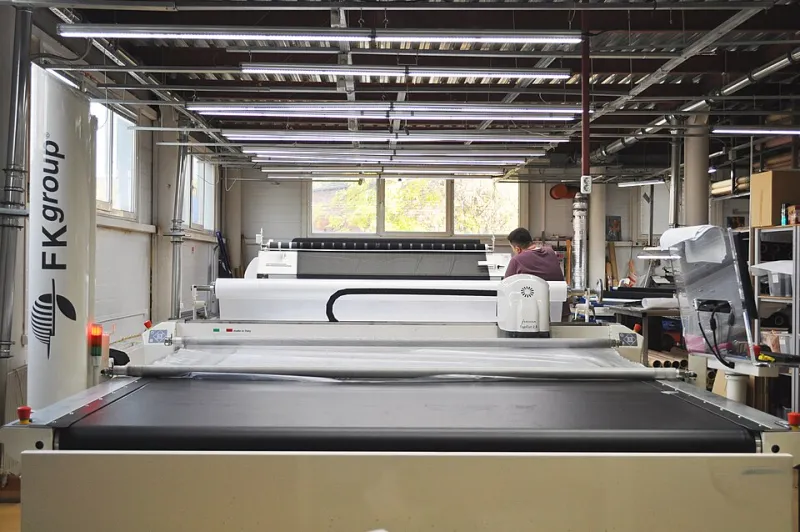
Photo: Щербакова Мария, CC BY-SA 4.0, via Wikimedia Commons
In American manufacturing, the pressure to move fast is rarely questioned. A customer demands early delivery, a production line stalls, or a procurement oversight creates a gap — and the instinctive response is to call in a rush order. The premium gets approved, the parts arrive, and the immediate crisis resolves. What rarely gets examined, however, is everything that happens in between.
The true cost of expedited manufacturing is not a line item. It is a series of compounding inefficiencies that accumulate across scheduling systems, supplier networks, workforce allocation, and quality assurance pipelines. For industrial buyers operating at scale, these hidden costs can dwarf the visible expedite fee — and they rarely appear in post-project audits.
The Visible Premium Is Only the Beginning
Most procurement professionals are familiar with the surface-level cost of a rush order: expedited freight, overtime labor charges, and the supplier's premium for accelerated turnaround. Industry data consistently places these visible markups between 20% and 50% above standard pricing, depending on lead time compression and material availability.
But the financial exposure does not stop at the purchase order. When a rush request enters a precision manufacturing environment, it disrupts the sequencing of every job already in the queue. Scheduled production runs are interrupted. Tooling setups that took hours to calibrate are broken down and reconfigured. In facilities operating near capacity — which describes most competitive US manufacturers today — a single expedited order can push multiple standard jobs past their delivery windows, triggering a chain of secondary rush requests from other clients.
This is the cascading effect that rarely surfaces in procurement reviews. One emergency order does not simply cost more. It costs everyone downstream.
What Happens to Supplier Relationships
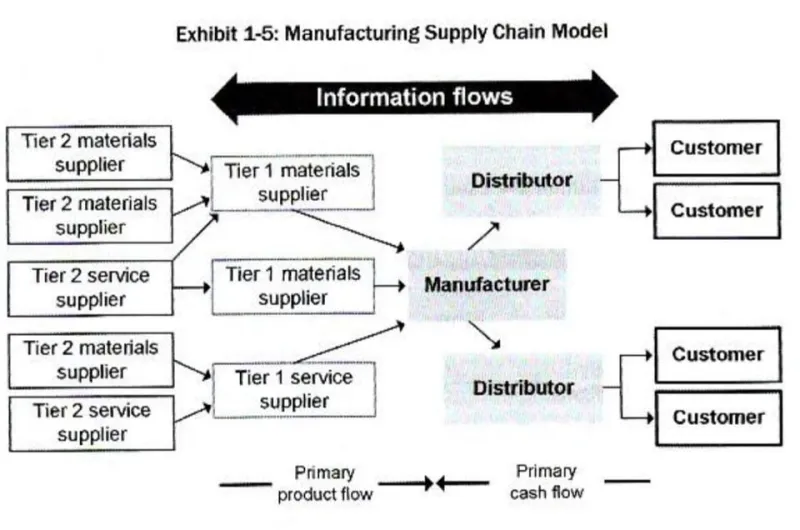
The relationship between an industrial buyer and a precision manufacturer is built on predictability. Material sourcing, machine scheduling, and workforce planning are all calibrated around anticipated order volumes and lead times. When expedited requests become habitual — even occasional — suppliers begin to price that unpredictability into their standard rates.
A 2022 analysis of mid-tier US manufacturers found that companies with a documented pattern of rush orders paid an average of 11% to 18% more on standard orders compared to comparable buyers with consistent, planned purchasing behavior. Suppliers do not absorb risk without compensation. Over time, the buyer who regularly demands urgency becomes the buyer who pays a permanent premium, whether or not any given order is expedited.
Beyond pricing, chronic rush orders can erode preferred customer status — the informal but commercially significant standing that determines who gets capacity allocation during supply crunches. In a constrained market, the buyer with a reputation for planned, stable procurement is prioritized. The buyer associated with unpredictability is not.
The Quality Variable That Gets Overlooked
Precision manufacturing is, by definition, a time-sensitive discipline — but not in the direction most buyers assume. The time sensitivity in precision work runs toward adequacy, not acceleration. Tight tolerances, complex geometries, and critical-use components require deliberate process steps: staged inspections, controlled cooling periods, dimensional verification, and documentation review.
When timelines compress, these steps face pressure. Some are abbreviated. Some are consolidated. In the best cases, experienced operators compensate through skill and vigilance. In the worst cases, parts that would have been caught in standard inspection reach the floor — or the field.
The downstream cost of a quality escape in a precision-dependent application is not speculative. Field failures, warranty claims, line stoppages, and liability exposure are measurable outcomes. A component that cost $400 to manufacture and $600 to expedite can generate six figures in remediation costs if it fails in service. The rush order that saved a deadline may ultimately define the most expensive decision of the procurement cycle.
Quantifying the Total Cost of Urgency
For industrial buyers seeking a practical framework, the following variables represent the minimum scope of a true total-cost-of-expedite analysis:
- Direct premium: Expedite fees, overtime, accelerated freight
- Scheduling disruption cost: Delays imposed on other active orders, recalibration labor
- Supplier relationship premium: Long-term rate inflation attributable to unpredictability
- Quality risk exposure: Statistical probability of defect rate increase multiplied by downstream failure cost
- Internal administrative burden: Time spent managing urgent requests versus planned procurement
- Opportunity cost: Capacity consumed by emergency orders that could have supported strategic production
When these variables are aggregated, the effective cost of a rush order routinely reaches two to three times its face value. For high-volume buyers, the annual aggregate of these hidden costs can represent a material line item that has never appeared in a budget review.
The Strategic Alternative: Planned Procurement as Competitive Advantage
The manufacturers that consistently outperform on cost, quality, and delivery reliability share a common characteristic: they treat procurement planning as a strategic function, not an administrative one. Demand forecasting, safety stock modeling, supplier lead time mapping, and production calendar alignment are not bureaucratic overhead — they are the operational infrastructure that eliminates the conditions that make rush orders feel necessary.
At Sohar Industries SPC, the clients who derive the greatest long-term value from our precision manufacturing capabilities are those who engage early in the planning cycle. Early engagement allows for optimized material sourcing, efficient machine scheduling, and thorough quality assurance — without the cost penalties that urgency imposes. It also allows our engineering and production teams to identify potential design or specification issues before they become expensive mid-run corrections.
The goal is not to eliminate responsiveness. Manufacturing partners must be capable of adapting to genuine, unavoidable changes in client needs. The goal is to distinguish between the emergencies that could not have been anticipated and the urgencies that were manufactured by insufficient planning — and to systematically reduce the latter.
A Practical First Step
For procurement and operations leaders evaluating their current position, a straightforward diagnostic involves auditing the last twelve months of purchase orders and flagging every expedited request. For each flagged order, document the stated reason for urgency and trace it back to its origin point. In most organizations, the majority of rush orders are traceable to internal planning gaps rather than genuine market disruptions.
That finding is not a criticism — it is an opportunity. Every preventable rush order represents a recoverable cost, a repairable supplier relationship, and a quality risk that can be designed out of the process. The economics of urgency are not inevitable. They are a choice, and they can be changed.
Precision manufacturing rewards precision planning. The manufacturers who understand that relationship are the ones who build supply chains that perform when it matters most.