Reshoring Without the Right Workforce Is Just Moving the Problem Closer to Home
For the better part of three years, reshoring has been the dominant strategic conversation in American manufacturing. Boardrooms that once optimized relentlessly for offshore cost arbitrage are now prioritizing supply chain resilience, lead time reduction, and domestic accountability. The logic is sound. The urgency is real. But a pattern is emerging across the industry that deserves serious attention: companies that successfully reshore their physical operations are discovering, often painfully, that proximity to the customer solves only half the problem.
The other half is people.
The Talent Equation That Relocation Cannot Fix
When a manufacturer moves production from an overseas facility to a domestic plant, the machinery can be shipped, the floor space can be leased, and the quality systems can be transplanted. What cannot be loaded into a container and delivered on schedule is a trained workforce. The US manufacturing sector is currently grappling with what economists and industry analysts have termed a structural skills deficit — a gap that has been widening for decades and that reshoring activity is now forcing into sharp relief.
According to data from the Manufacturing Institute, the US faces a projected shortfall of 2.1 million skilled manufacturing workers by 2030. That figure predates the surge in reshoring announcements that followed pandemic-era supply chain disruptions and subsequent geopolitical pressures. In practical terms, manufacturers returning operations to American soil are entering a labor market where experienced CNC machinists, precision toolmakers, and process engineers are already in short supply — and where competition for that talent is intensifying by the quarter.
The consequences are not abstract. Several high-profile reshoring initiatives have launched with considerable fanfare, only to find that their new domestic facilities are operating at a fraction of planned capacity months after opening — not because of equipment issues or regulatory delays, but because qualified operators simply were not available in sufficient numbers.
Decades of Brain Drain Don't Reverse Overnight
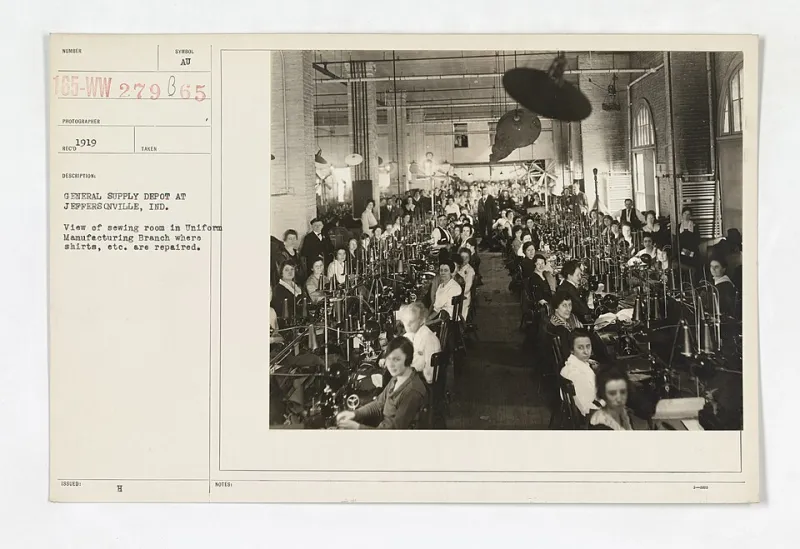
Understanding why the talent gap is so acute requires a frank look at what happened during the offshoring era. As manufacturing migrated overseas throughout the 1990s and 2000s, the domestic pipeline for skilled trades quietly collapsed. Vocational programs were defunded or eliminated. The cultural narrative shifted away from manufacturing careers, particularly among younger generations who were steered toward four-year degree paths. Apprenticeship programs, once a cornerstone of industrial workforce development, became rare exceptions rather than standard practice.
The institutional knowledge that accumulated in American shops over generations — the kind of tacit expertise that experienced machinists carry in their hands and their judgment — was not preserved. It retired, or it was never passed on. What remains is an aging skilled workforce with a demographic cliff approaching, and a generation of potential replacements that was never systematically cultivated.
This is the context into which reshoring initiatives are now stepping. The challenge is not simply hiring; it is rebuilding an entire talent ecosystem that atrophied over the course of two decades.
What Strategic Workforce Development Actually Looks Like
Manufacturers that are navigating this challenge successfully share a common characteristic: they treat workforce development as a capital investment, not an HR function. The distinction matters enormously in how resources are allocated and how timelines are set.
Apprenticeship and Community College Partnerships
Some of the most effective domestic talent pipelines being built today run directly through community colleges and regional technical institutions. Manufacturers that have formalized apprenticeship agreements with these institutions are creating structured pathways where students rotate through real production environments while completing their credentials. This model requires upfront investment in curriculum development and dedicated training capacity on the shop floor, but it produces operators who are job-ready and already familiar with the company's specific processes and standards.
The key differentiator in programs that sustain themselves over time is employer commitment to retention. Apprenticeship graduates who receive competitive compensation, clear advancement pathways, and genuine investment in their continued development stay. Those who feel they were hired as low-cost trainees and then left to stagnate do not.
Automation as a Training Accelerator
There is a productive tension in the relationship between automation and workforce development that forward-thinking manufacturers are beginning to exploit. Advanced CNC equipment, collaborative robotics, and digital simulation platforms can actually compress the learning curve for new operators — not by replacing human judgment, but by providing structured, repeatable environments in which that judgment can be developed more efficiently.
Simulation-based training tools, for example, allow new machinists to develop programming and setup skills without consuming machine time or risking production quality. When trainees transition from simulation to live equipment, they arrive with a foundation that would have taken significantly longer to build through traditional on-the-job exposure alone. In this framing, automation investment and workforce investment are not competing priorities — they are complementary ones.
Wage Realism and the Overseas Comparison Problem
One of the more uncomfortable conversations happening in reshoring strategy is about compensation. Companies accustomed to overseas wage structures are sometimes slow to recalibrate their domestic pay expectations, and the results are predictable. Skilled workers in tight labor markets have options. A machinist with five years of precision experience in a competitive metro region is not going to accept a wage that reflects offshore benchmarks.
Manufacturers that are building stable domestic workforces have accepted that domestic labor costs are a structural feature of domestic production, not a problem to be minimized away. They are competing on total value proposition — compensation, benefits, working conditions, advancement opportunity, and workplace culture — rather than on wage rates alone.
The Long Game in Domestic Talent
Reshoring is ultimately a long-term strategic posture, and the workforce dimension of that posture requires the same long-term thinking. Companies that expect to reshore in year one and be fully staffed with experienced operators by year two are setting themselves up for frustration. The realistic timeline for building a sustainable domestic workforce through structured development programs is three to five years — and that clock starts only when the investment begins.
For manufacturers serious about making reshoring work, the imperative is to start the workforce investment before the facility is operational, not after. Engaging with regional educational institutions, identifying potential apprenticeship cohorts, and establishing training infrastructure during the facility build-out phase compresses the timeline considerably and signals to the local labor market that the commitment is genuine.
The companies that will win the domestic manufacturing race over the next decade are not necessarily those with the most advanced equipment or the most aggressive reshoring timelines. They are the ones that understood early that sustainable production requires sustainable people — and that built accordingly.