Building Supply Chains That Bend Without Breaking: A Practical Elasticity Guide for US Manufacturers
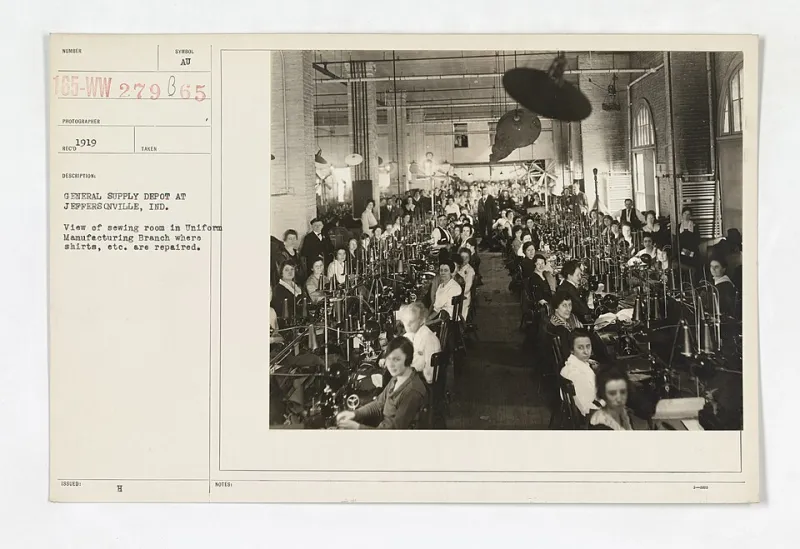
Photo: Unknown authorUnknown author or not provided, Public domain, via Wikimedia Commons
The events of the past half-decade delivered a pointed lesson to US manufacturing: supply chains designed exclusively around efficiency are, by definition, designed to fail under stress. The logic of lean — reduce inventory, tighten supplier relationships, eliminate redundancy — produces genuine cost benefits when the environment is predictable. When it is not, the same characteristics that made a supply chain efficient become the mechanisms of its disruption.
The response from many manufacturers was instinctive and understandable: build inventory. Add buffer stock. Qualify backup suppliers. These measures reduced immediate vulnerability, but they also reversed years of working capital improvement and created carrying costs that eroded the margin gains lean had delivered.
The more durable solution is neither pure lean nor traditional buffering. It is elasticity — the capacity to absorb variation and disruption without either stockpiling excess inventory or losing the responsiveness that customers require.
Understanding What Elasticity Actually Means
Elasticity in a supply chain context is the ability to expand or contract capacity, sourcing, and output in response to changing conditions without incurring disproportionate cost or delay. An elastic supply chain does not eliminate disruption — no design can do that. What it does is ensure that disruption does not cascade into a production stoppage, a missed customer commitment, or a forced choice between accepting unacceptable lead times and paying emergency sourcing premiums.
Elasticity is distinct from redundancy. Redundancy — maintaining duplicate suppliers for every critical input, holding months of safety stock across all SKUs — provides resilience but at a cost that most manufacturers cannot sustain as a permanent operating posture. Elasticity, by contrast, is structural. It is built into how the supply chain is designed, not layered on top of it as an insurance policy.
The distinction matters because it determines where the investment goes and what the return looks like.
Supplier Diversification as a Structural Strategy
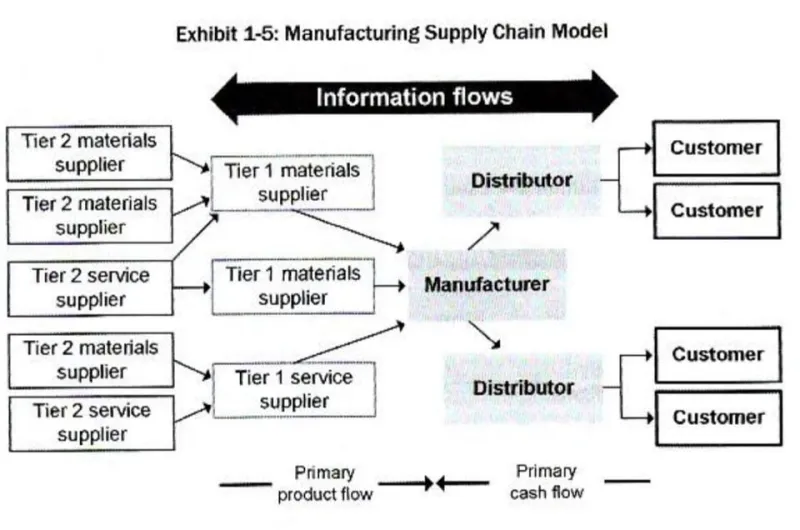
For most US manufacturers, the first and most consequential step toward supply chain elasticity is reconsidering the supplier concentration that lean practices encouraged. Single-source relationships offer cost advantages through volume consolidation and simplified coordination. They also create single points of failure that, as recent years demonstrated, can halt production with very little warning.
Strategic diversification does not require abandoning preferred supplier relationships. It requires designing those relationships with flexibility in mind. A practical approach used by a growing number of US manufacturers involves a tiered sourcing structure: a primary supplier captures the majority of volume under favorable pricing terms, while one or more qualified secondary suppliers maintain active relationships — receiving a defined percentage of orders to keep capabilities current and relationships warm.
This approach preserves most of the cost benefit of volume concentration while eliminating the all-or-nothing exposure of single-source dependency. When the primary supplier encounters capacity constraints, a quality event, or a logistics disruption, the secondary relationship is already operational rather than theoretical.
Geographic diversification within the domestic supply base also warrants deliberate attention. Concentrating sourcing within a single region — however efficient that may be in normal conditions — creates exposure to regional weather events, labor market disruptions, and infrastructure failures that can affect multiple suppliers simultaneously.
Modular Production Design as an Elasticity Multiplier
Supply chain flexibility is not achieved through procurement strategy alone. The design of the production operation itself either enables or constrains the supply chain's ability to adapt. Modular production design — structuring manufacturing processes around reconfigurable cells and standardized interfaces rather than fixed, product-specific lines — dramatically expands the range of conditions under which an operation can function effectively.
When a production line is purpose-built for a single product configuration, any disruption to the inputs that configuration requires creates an immediate stoppage. When the same floor space and equipment can be reconfigured to produce alternate specifications or accommodate substitute materials, the operation retains output capability even when specific inputs are unavailable.
For manufacturers producing across a range of product families, modularity also enables demand-driven reallocation — shifting capacity toward products where materials are available and demand is active, rather than idling capacity waiting for constrained inputs to arrive.
The upfront engineering investment in modular design is real, but the operational return — in both disruption resilience and demand responsiveness — justifies that investment across a wide range of manufacturing contexts.
Strategic Stock Positioning: Buffering Where It Counts
Abandoning the instinct to carry inventory entirely is not the answer. The more disciplined approach is to carry inventory strategically — concentrated at the points in the supply chain where it generates the greatest protective value and where carrying costs are most manageable.
For most manufacturers, that means maintaining buffer stock at the raw material or semi-finished stage rather than in finished goods, and concentrating that buffer on inputs that combine high criticality with long lead times or limited supplier availability. A component that can be sourced domestically in three days from multiple suppliers requires minimal safety stock. A specialty alloy with a twelve-week lead time from a single offshore source warrants a very different calculus.
Analyzing the supply base through the dual lens of lead time and supplier concentration identifies the specific inputs where strategic buffering delivers the greatest risk-adjusted return. This analysis is frequently more revealing than manufacturers expect — and it often surfaces that current safety stock levels are misallocated, providing protection where it is least needed and leaving genuine vulnerabilities unaddressed.
Demand Signal Visibility as a Competitive Advantage
Elastic supply chains require information to function. The faster and more accurately a manufacturer can see demand signals moving through the customer base, the earlier adjustments can be initiated — before a demand surge creates a shortage or a demand decline creates an inventory overhang.
US manufacturers that have invested in deeper integration with their customers' procurement and planning systems — through shared forecasting tools, EDI connectivity, or collaborative planning processes — consistently demonstrate better supply chain performance during periods of demand volatility. They are not reacting to disruption; they are anticipating it with enough lead time to respond through normal channels rather than emergency ones.
This visibility is increasingly a competitive differentiator in industrial B2B markets. Customers under their own supply chain pressure are actively seeking manufacturing partners who can demonstrate planning integration and responsiveness, not merely price competitiveness.
Elasticity as an Ongoing Discipline
Supply chain elasticity is not a project with a completion date. It is a discipline that requires ongoing attention as market conditions, supplier landscapes, and production requirements evolve. The manufacturers who sustain it most effectively treat supply chain design as a strategic function — resourced and reviewed at the same level of seriousness as product development or capital investment.
At Sohar Industries SPC, that perspective informs how we approach our own operational relationships and how we support the manufacturing partners and customers who depend on our capabilities. Building supply chains that perform under pressure is not a contingency exercise. It is the foundation of reliable industrial partnership.