Breaking Free from the Inventory Trap: How US Manufacturers Are Shifting to Demand-Driven Production
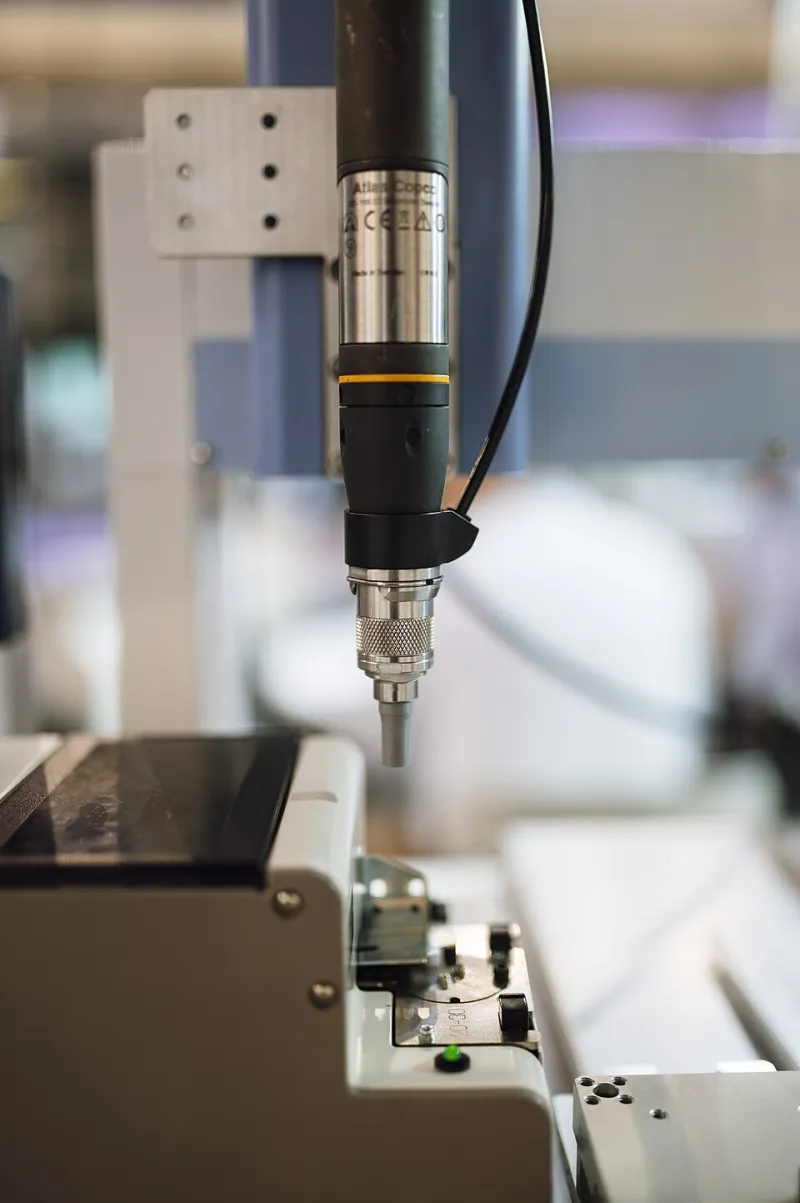
Photo: Shixart1985, CC BY 2.0, via Wikimedia Commons
For decades, the logic of batch manufacturing felt like economic gravity—immovable and universal. Run large quantities to spread setup costs. Maintain safety stock to buffer against demand variability. Accept that capital tied up in finished goods inventory is simply the cost of staying competitive on lead time. The model was not elegant, but it was familiar, and familiarity has a way of persisting long after better alternatives emerge.
That persistence is now eroding. Across the US manufacturing sector, a meaningful cohort of operations—ranging from precision component suppliers to mid-size contract manufacturers—have demonstrated that demand-driven production is not a theoretical ideal but an operational reality. The transition is neither simple nor instantaneous, but the outcomes are compelling enough that the question for most manufacturers is no longer whether to pursue this model, but how.
The True Cost of the Inventory Buffer
Before examining the transition, it is worth revisiting why the traditional batch model carries costs that are easy to understate.
Inventory represents working capital that is not working. Every unit sitting in a finished goods warehouse is a dollar that could be deployed elsewhere—toward equipment investment, workforce development, or the kind of process improvement that generates compounding returns. For manufacturers operating on thin margins, the opportunity cost of excess inventory is not trivial.
Beyond capital, inventory carries operational risk. Product held in finished goods can become obsolete if specifications change, damaged through handling, or misallocated against the wrong demand signal. In industries where customer requirements evolve quickly—automotive components, electronics subassemblies, medical device parts—finished goods inventory can transform from an asset to a liability faster than replenishment cycles allow.
Large batch schedules also introduce a subtler problem: they mask process inefficiency. When a manufacturer runs a thousand units to justify a lengthy setup, the true cost of that setup is hidden by volume. Demand-driven models force a reckoning with setup time, changeover efficiency, and process standardization that batch manufacturing defers indefinitely.
The Enabling Technologies and Systems
The shift toward on-demand production has been accelerated by several converging developments that were not available—or not sufficiently mature—a decade ago.
Advanced scheduling systems now allow manufacturers to model capacity, sequencing, and changeover requirements with a level of precision that manual planning cannot achieve. Modern manufacturing execution systems (MES) can dynamically reprioritize work orders in response to real-time demand signals, reducing the planning lag that once made batch scheduling feel necessary. These platforms have become increasingly accessible to mid-market manufacturers, not just large-scale operations with enterprise budgets.
Supplier integration is equally critical. Demand-driven production at the finished goods level creates corresponding pressure upstream. If a manufacturer is going to reduce its raw material and work-in-process inventory, its suppliers must be capable of responding with shorter lead times and higher delivery reliability. The manufacturers who have successfully made this transition have typically invested significant effort in supplier development—qualifying backup sources, sharing demand visibility further up the supply chain, and in some cases co-locating supplier-managed inventory near their production floor.
Process standardization may be the least glamorous element of the transition, but it is arguably the most foundational. Demand-driven models require rapid changeover between product variants. That speed is only achievable when processes are documented, repeatable, and optimized. Manufacturers who attempt the transition without addressing changeover efficiency frequently find that their theoretical capacity advantage is consumed by setup time, negating the inventory savings.
What the ROI Numbers Actually Show
The financial case for demand-driven production is strongest when examined across multiple dimensions simultaneously rather than in isolation.
Inventory turns are the most direct metric. Manufacturers who have successfully implemented demand-driven models typically report inventory turn improvements in the range of 30 to 60 percent within the first two years of transition. For a mid-size operation carrying $4 million in average inventory, a 40 percent improvement in turns represents roughly $1.6 million in freed working capital—a figure that tends to focus executive attention quickly.
Lead time performance is the second dimension. Counter-intuitively, manufacturers often find that lead times improve rather than extend after the transition. When production scheduling is driven by actual demand signals rather than batch logic, the queue of work in process is shorter and more predictable. Customers receive commitments that reflect real capacity rather than optimistic batch cycle assumptions, and on-time delivery performance typically improves alongside the inventory reduction.
Scrap and rework rates frequently decline as well. Smaller production runs mean that quality problems are identified and corrected before they propagate through a large batch. The feedback loop between production and quality tightens, and the cost of nonconformance drops accordingly.
The Transition Roadmap: Where to Begin
For manufacturers considering this shift, the path is more manageable when approached in stages rather than as a wholesale transformation.
The most productive starting point is typically a value stream analysis focused on identifying the product families where demand patterns are most consistent and predictable. Demand-driven models perform best where the signal is clear. Beginning with high-variability, low-volume products introduces complexity that can undermine confidence in the approach before its benefits have time to materialize.
From there, the focus should shift to changeover reduction—specifically, identifying the two or three setup operations that consume the most time and attacking them systematically. Significant changeover reductions are often achievable through tooling organization, standardized procedures, and modest equipment modifications rather than capital-intensive automation.
Supplier conversations should begin early, not after the internal process changes are complete. Suppliers who understand the direction of travel can begin adjusting their own processes and inventory positioning in ways that support the transition. Those who learn about it after the fact are likely to create supply disruptions that reinforce skepticism about the model.
A Competitive Posture, Not Just an Operational Choice
US manufacturers are operating in an environment where customer expectations around responsiveness have shifted substantially. The tolerance for long lead times and large minimum order quantities has narrowed across most industrial sectors. Buyers who once accepted eight-week lead times as standard are increasingly sourcing from suppliers who can commit to two or three weeks—or less.
The manufacturers who treat demand-driven production as a competitive repositioning rather than a cost reduction exercise tend to capture the most durable value from the transition. Freed capital is important. Faster lead times are important. But the most significant outcome may be the organizational capability that develops through the process—the discipline of process standardization, supplier integration, and data-driven scheduling that makes a manufacturer genuinely more responsive than its competitors.
That capability, once built, is not easily replicated. And in the current competitive landscape, it is worth considerably more than the inventory it replaces.